Training a Reactive Dog: What Actually Works?
By Christelle S. • 2025-03-08
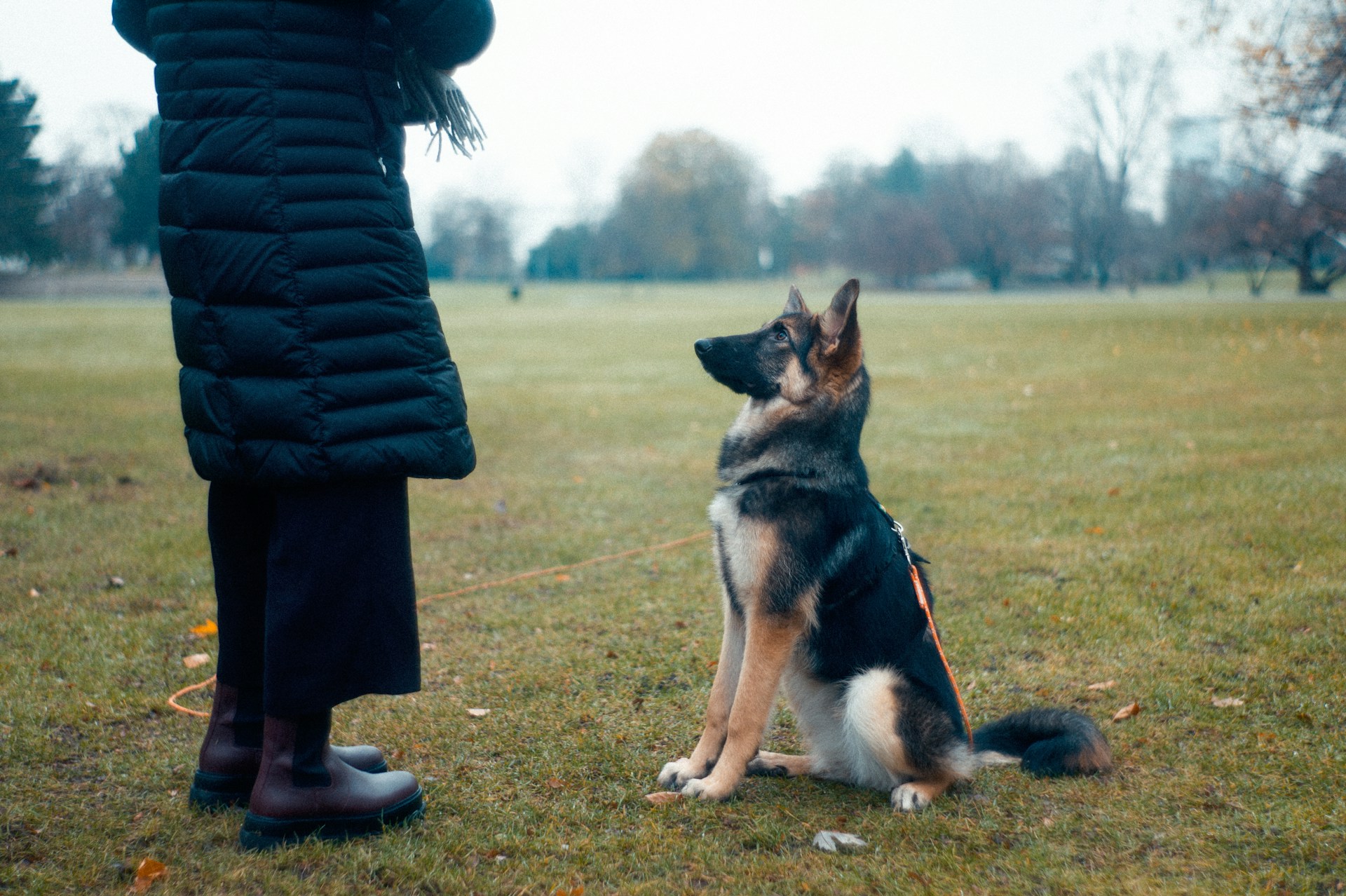
Training a reactive dog isn’t about quick fixes—it’s about patience, consistency, and understanding. When I first started working with my reactive dog, I thought I could “train out” the reactivity with enough effort. But the reality is, reactivity isn’t just a behavior issue; it’s an emotional response. Once I shifted my mindset from “fixing” to “helping,” training became a lot more effective.
Here’s what actually worked for us:
1. Building a Strong Foundation with Engagement
Before tackling reactivity directly, I had to strengthen my dog’s engagement with me. If she wasn’t focused on me at home, there was no way she’d listen in a high-stress situation outside.
- Name recognition: I practiced saying her name and rewarding her every time she looked at me.
- Hand touches: Teaching her to boop my hand with her nose became a great way to redirect her in tense moments.
- Eye contact: Rewarding her for checking in with me reinforced that I was the most important thing around, not the trigger.
2. Desensitization & Counterconditioning (The Game Changer)
One of the most effective training methods we used was desensitization and counterconditioning (DS/CC). Instead of throwing my dog into stressful situations and expecting her to cope, we took a slow, structured approach.
- Step 1: Start at a distance. If she reacted to dogs at 20 feet, I kept her at 25 feet and rewarded calm behavior.
- Step 2: Pair triggers with good things. The second she noticed a trigger, I gave her a high-value treat before she reacted. Over time, she started associating triggers with good things instead of fear.
- Step 3: Gradually close the gap. As she became more comfortable, I slowly decreased the distance while keeping her under threshold.
This process took time, but it completely changed how she viewed her triggers.
3. Managing the Environment
Sometimes, training means setting your dog up for success rather than forcing them into tough situations.
- I avoided crowded parks or places with off-leash dogs.
- I used a yellow “Nervous Dog” vest to give us more space.
- I chose training times when fewer distractions were around.
I realized that my dog wasn’t “failing” training if we needed to cross the street or walk away—it was just smart management.
4. Teaching Alternative Behaviors
Instead of telling my dog what not to do, I started teaching her what to do.
- Look at That (LAT): I encouraged her to look at triggers and then look back at me for a treat.
- Emergency U-Turn: If a situation got too overwhelming, I taught her to turn and follow me in the opposite direction.
- Find It: Scattering treats on the ground kept her nose down and focus away from distractions.
Training alternative behaviors helped her feel more in control, which reduced her reactive outbursts.
5. Managing My Own Expectations
The biggest thing I had to train? Myself.
- I stopped expecting her to be a “normal” dog. She’s her own unique self, and that’s okay.
- I learned to celebrate small wins—like walking past a dog calmly, even from a distance.
- I gave myself permission to take breaks when training felt overwhelming.
Final thoughts
Training a reactive dog isn’t a linear process. Some days feel like progress, and others feel like setbacks. But with patience, consistency, and the right techniques, things do get better.
If you’re working on training your reactive dog, remember: it’s not about perfection. It’s about progress, one small step at a time.